


Titanium Wire
Why Choose Us
QUALITY ASSURANCE
QC Team leading by a 20 years experienced UT engineer. Quality control from titanium sponge to finished products. Every process is traceable.
GOOD SERVICE
Patient and professional sales and after-sales provide 7/24 service, for products information and suggestions.
REASO NABLE PRICE
We can not promise that our price is the cheapest, but we are sure our price is the most competitive under quality assurance.
FAST DELIVERY
There are plenty of titanium inventory. We can arrange production and delivery the products as fast as possible.
What is Titanium Wire?
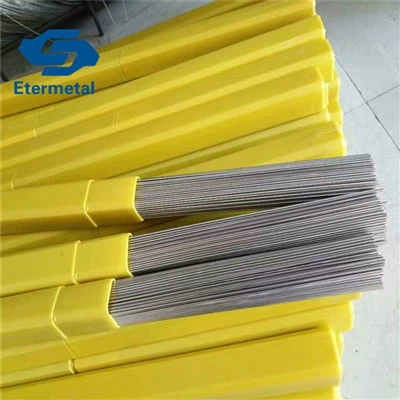
Titanium wire is a type of wire made from titanium, a strong and lightweight metal. It is known for its excellent strength, durability, and corrosion resistance. It is commonly used in various industries, such as aerospace, medical, automotive, and marine.



What Are The Main Advantages Of Titanium Wire?
Lightweight and high strength: Titanium wire is a lightweight metal with high strength. Its specific strength (ratio of strength to density) exceeds that of other common metals such as steel and aluminum, making it useful in applications where strength is required but light weight is required.
Good corrosion resistance: Titanium wire has good corrosion resistance, especially high resistance to oxidation, acid, salt water and other environments. This makes titanium wire widely used in fields such as marine environments, chemical industries, and medical devices.
Biocompatibility: Because titanium wire has good biocompatibility, it is widely used in medical devices, human implants, and dental applications. Titanium wire can combine well with human tissue, reducing the risk of foreign body rejection.
Good processing performance: Titanium wire has good processing performance and can be processed into products of different shapes through various methods, such as titanium alloys, titanium wires, etc.
High-temperature stability: Titanium wire remains stable in high-temperature environments, so it is widely used in aerospace, aerospace engineering, and high-temperature applications.
High wear resistance: The surface of titanium wire has excellent wear resistance, which makes it an ideal choice in some applications that require wear resistance.
Recyclability: Titanium wire is a recyclable material, which helps reduce resource waste and is environmentally friendly.
What Are The Uses Of Titanium Wire?
With the development of economy, the demand for titanium and titanium alloy wires is increasing. At present, the supply of titanium wire is in short supply, and the development potential is huge. Pure titanium is a silver-white metal with many excellent properties. Titanium has a density of 4.54g/cm3, which is 43% lighter than steel and slightly heavier than the prestigious light metal magnesium. The mechanical strength is similar to that of steel, two times greater than that of aluminum and five times greater than that of magnesium. Titanium is resistant to high temperature and has a melting point of 1942K, which is nearly 1000K higher than gold and nearly 500K higher than steel. In recent years, with the continuous research and development of titanium materials, there are more and more titanium products on the market today. Titanium wire is one of the common titanium products in our life.
Titanium wire perfectly inherits the advantages of titanium and titanium alloys, and has a series of excellent characteristics such as good corrosion resistance, high specific strength, non-magnetic, high biocompatibility, low ultrasonic impedance, and good shape memory function. Therefore, titanium and titanium alloy wires are widely used in many fields.


At present, more than 80% of titanium and titanium alloy wires are used as welding wires, such as welding of various titanium equipment, welded pipes, repair welding of turbine disks and blades of aircraft jet engines, and welding of casings.
Titanium wire has been widely used in chemical, pharmaceutical, papermaking and other industries because of its excellent corrosion resistance. It can be made into filter screen for sea water filter, pure water filter, chemical filter.
Titanium and titanium alloy wires are also used to manufacture fasteners, load-bearing components, springs, etc. due to their good comprehensive properties.
In the medical and health industry, due to its excellent biocompatibility, titanium and titanium alloy wires are used to manufacture medical devices, such as implanted dental crowns, skull fixation, etc.
Some titanium alloy wires with shape memory function, such as titanium-nickel alloy wires, are used to make satellite antennas, shoulder pads for clothes, women's bras, spectacle frames, etc.
In the electroplating and water treatment industries, titanium and titanium alloy wires are used to manufacture various electrodes.
The Advantages Of Using 3D Titanium Wire In Manufacturing
What is 3D Titanium Wire? 3D titanium wire is a type of metal wire that is used in 3D printing. It is made from titanium, which is a strong and durable metal that is resistant to rust and corrosion. 3D titanium wire is produced by melting titanium and then extruding it into a wire form. The wire is then used in a 3D printer to create objects with intricate designs and shapes.
Advantages of Using 3D Titanium Wire There are several advantages to using 3D titanium wire in the manufacturing process.
Firstly, titanium is a lightweight material, which makes it ideal for creating parts that need to be strong and durable, but also lightweight. This is especially important in the aerospace and automotive industries, where weight reduction is a key factor in improving performance.
Secondly, 3D titanium wire is incredibly strong and durable. It has a high strength-to-weight ratio, which means that it can withstand a lot of force without breaking. This makes it ideal for creating parts that need to withstand high stress and pressure, such as engine components and medical implants.
Thirdly, titanium is biocompatible, which means that it is not toxic to the human body. This makes it ideal for creating medical implants, such as artificial joints and dental implants. Titanium is also resistant to corrosion, which means that it can withstand exposure to bodily fluids without deteriorating.
Applications of 3D Titanium Wire There are many applications for 3D titanium wire in the manufacturing industry. In the aerospace industry, 3D titanium wire is used to create parts for airplanes and spacecraft. These parts need to be lightweight and strong, which makes titanium an ideal material. In the automotive industry, 3D titanium wire is used to create parts for high-performance cars. The lightweight and strong nature of titanium make it ideal for creating parts that need to withstand high temperatures and pressures. In the medical industry, 3D titanium wire is used to create medical implants, such as artificial joints and dental implants. The biocompatible nature of titanium makes it ideal for use in the human body, and its strength and durability ensure that the implants will last for many years.
Exploring the Strength and Durability of Titanium Wire
Strength
One of the most significant properties of titanium wire is its high strength-to-weight ratio. Titanium is as strong as steel but about 45% lighter, making it an ideal material for applications where weight savings are crucial. This characteristic is particularly valuable in the aerospace, automotive, and sporting goods industries, where reducing weight without sacrificing strength can lead to improved performance and fuel efficiency.
Durability
Titanium’s durability is another key factor that makes it an attractive material. It has excellent fatigue resistance, meaning it can withstand repeated loading and unloading cycles without experiencing significant degradation. This property is essential in applications such as aircraft components, where materials are subjected to constant stress and must maintain their integrity over long periods.


Corrosion Resistance
Titanium wire is renowned for its exceptional corrosion resistance, which is superior to many other metals. This resistance is due to the formation of a stable oxide layer on the surface of the titanium when it is exposed to oxygen. This oxide layer acts as a protective barrier, preventing further oxidation and corrosion. As a result, titanium metal is highly suitable for use in harsh environments, such as marine and chemical processing applications, where other metals would quickly deteriorate.
Biocompatibility
Titanium is also biocompatible, meaning it is not harmful or toxic to living tissue. This property has led to its widespread use in the medical field, particularly in the manufacture of implants and surgical instruments. Titanium steel is used in various medical devices, including pacemaker leads, dental implants, and orthopedic implants, where its strength, durability, and compatibility with the human body are critical.
Applications of Titanium Wire
Aerospace Industry
In the aerospace industry, the demand for materials that offer high strength, low weight, and excellent durability is paramount. Titanium wire meets these requirements perfectly, making it a preferred choice for various aerospace components. It is used in the manufacture of aircraft engines, airframes, and fasteners, where its ability to withstand extreme conditions and resist corrosion is crucial. The use of titanium metal contributes to the overall performance, safety, and fuel efficiency of aircraft.
Automotive Industry
The automotive industry has also embraced titanium wire for similar reasons. High-performance vehicles, including sports cars and motorcycles, benefit from titanium wire’s strength and lightweight properties. Titanium exhaust systems, valve springs, and connecting rods are some of the components where titanium wire is utilized to enhance performance and reduce weight. The durability of titanium wire ensures that these components can withstand the high stresses and temperatures associated with automotive applications.
Medical Field
As mentioned earlier, titanium wire’s biocompatibility makes it invaluable in the medical field. Orthopedic implants, such as hip and knee replacements, often incorporate titanium wire to provide structural support and ensure long-term functionality. Additionally, titanium steel is used in dental implants, where its strength and resistance to corrosion ensure the longevity and reliability of the implants. The medical industry’s reliance on titanium wire underscores its importance in improving patient outcomes and quality of life.
Marine Applications
The marine environment is notoriously harsh, with saltwater and other corrosive elements posing significant challenges to materials. Titanium wire’s exceptional corrosion resistance makes it an ideal choice for marine applications. It is used in the construction of ship components, offshore drilling equipment, and underwater cables, where its durability ensures long-term performance and reliability. The ability of titanium steel to resist corrosion in such environments reduces maintenance costs and extends the lifespan of critical marine infrastructure.
Future Prospects of Titanium Wire
The future of titanium wire looks promising, with ongoing research and development aimed at overcoming current challenges and expanding its applications. Advances in manufacturing techniques, such as additive manufacturing (3D printing), are opening new possibilities for the use of titanium wire. Additive manufacturing allows for the production of complex geometries and customised components, further enhancing the versatility of titanium wire.
In addition, efforts to reduce the cost of titanium steel production are underway. Innovations in extraction and refining processes could make titanium more affordable and accessible, broadening its use in various industries. As the demand for high-performance materials continues to grow, titanium steel wire is likely to play an increasingly important role in meeting the needs of advanced technological applications.
Titanium wire is a remarkable material that offers a unique combination of strength, durability, corrosion resistance, and biocompatibility. The versatility of this material makes it indispensable in a wide range of industries, from aerospace and automotive to medical and marine. Although titanium wire has challenges such as cost and machining difficulties, it has long-term benefits and the potential for future advancement. Strength and durability of titanium wire will undoubtedly contribute to the development of innovative solutions and advancements in a variety of fields as technology continues to evolve.
Certifications


Our Factory
Stable quality is our soul of business. Etermetal is committed to supply qualified and stable products to clients. Etermetal has a dedicated QC team leading by a 20+ years experienced UT inspectors control products quality from the very beginning to finished products. Produce processes are traceable and recorded. Before shipping, products are all chemical tested, visual inspected, dimensional inspected, physical and , UT inspected. The testing certificate is given to clients before shipping too. BV, SGS third party inspection also available when clients can not come to mill in person.