


Titanium Pipe and Tube
Why Choose Us
QUALITY ASSURANCE
QC Team leading by a 20 years experienced UT engineer. Quality control from titanium sponge to finished products. Every process is traceable.
GOOD SERVICE
Patient and professional sales and after-sales provide 7/24 service, for products information and suggestions.
REASO NABLE PRICE
We can not promise that our price is the cheapest, but we are sure our price is the most competitive under quality assurance.
FAST DELIVERY
There are plenty of titanium inventory. We can arrange production and delivery the products as fast as possible.
What is Titanium Pipe and Tube?
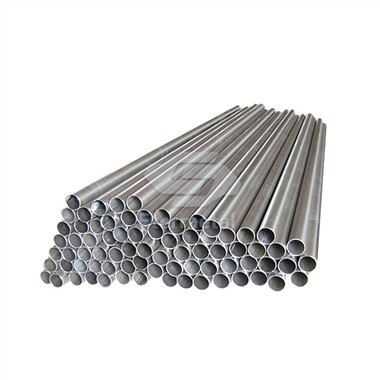
Titanium pipe is light in weight, high in strength and excellent in mechanical properties. It is widely used in heat exchange equipment, such as tubular heat exchanger, coil heat exchanger, serpentine heat exchanger, condenser, evaporator and transmission pipeline. Many nuclear power industries use titanium pipes as their unit standard pipes.


How To Weld Titanium Tube?
Understanding Titanium Welding
Welding titanium tubes requires specialized knowledge due to titanium's unique properties, such as high reactivity with oxygen and susceptibility to contamination at high temperatures. The welding process for titanium necessitates precise control of parameters to ensure a strong, high-quality joint without compromising its inherent properties.
What Type of Welding is Used for Titanium?
The most common types of welding used for titanium include TIG (Tungsten Inert Gas) welding, also known as GTAW (Gas Tungsten Arc Welding), and electron beam welding. TIG welding is favored for its precision and control, utilizing a non-consumable tungsten electrode and an inert gas shield to protect the weld pool from contamination.
Electron beam welding, on the other hand, employs a highly focused beam of electrons to join titanium tubes. This method, performed under vacuum conditions, results in deep penetration and minimal distortion, ideal for specific applications requiring high weld quality.
Challenges in Titanium Tube Welding
Welding titanium tubes presents challenges due to the metal's reactive nature and its sensitivity to impurities. Controlling the welding environment, such as using a protective inert gas atmosphere, is crucial to prevent contamination. Additionally, pre-cleaning and proper joint fit-up are essential to achieve a successful weld.
Moreover, maintaining precise control over welding parameters, such as heat input and travel speed, is critical to prevent microstructural changes that could compromise the material's properties.
Best Practices and Techniques
To ensure successful welding of titanium tubes, several best practices must be adhered to. This includes using specialized equipment designed for titanium welding, employing proper shielding gas, and meticulous surface preparation to prevent oxidation and contamination.
Furthermore, following stringent quality control measures and conducting thorough inspections post-welding are vital steps to verify the integrity and quality of the welded joints.
Applications and Importance of Proper Titanium Tube Welding
Welded titanium tubes find applications in various industries, including aerospace, chemical processing, and marine engineering. The ability to create robust, leak-proof joints in titanium tubing is crucial for these industries where reliability and durability are paramount.
The importance of proper welding techniques cannot be overstated, as the integrity of welded titanium tubes directly impacts the safety and performance of critical components in different applications.
Do You Know The Welding Maintenance Characteristics Of Titanium Pipes?
Titanium is a chemical element characterized by lightweight, high strength, metallic luster, and good corrosion resistance. Titanium is a chemically active metal. When heated, it can interact with non-metals such as O2, N2, H2, S, and halogens. However, at normal temperatures, an extremely thin and dense oxide protective film is easy to form on the surface of titanium, which can resist the action of strong acid or even aqua regia, showing strong corrosion resistance. Therefore, general metals become riddled with holes in acid solutions, but titanium is safe. It is usually divided into the α-titanium alloy, β-titanium alloy, and ɑ+β-titanium alloy. Among them, α-titanium alloy and α+β-titanium alloy are the most commonly used.
1) Contamination of impurity elements causes embrittlement Titanium is an active element, especially at high welding temperatures, it is very easy to absorb nitrogen, hydrogen, and oxygen, thereby increasing the hardness and strength of the weld, reducing plasticity and toughness, and causing embrittlement. Carbon also forms hard and brittle TiC with titanium, which is easy to cause cracks.
2) Welding cracks The probability of welding thermal cracks generated during the welding of titanium alloys is extremely small, and thermal cracks may only occur when the quality of the welding wire or the base material has problems. The cold cracks caused by hydrogen should be prevented during the welding of titanium alloys. During welding, the hydrogen in the molten pool and the base metal in the low-temperature zone diffuse to the heat-affected zone, causing the hydrogen content in the heat-affected zone to increase, resulting in delayed cracks in the heat-affected zone.
3)Pores are the most common welding defect during the welding of titanium and titanium alloys. If the surface of the welding wire or base metal is not cleaned cleanly or the argon gas is not pure, it will cause pores.
Due to its good corrosion resistance, heat resistance and high strength, titanium alloy is widely used in various production links of smelting enterprises, the most common application is the heating link in the hydrometallurgical production process. The titanium metal pipes at the production site of our factory are mainly used for storage tanks of various specifications and models, and solution heating coils inside the kettle body. According to statistics, there are more than 40 sets of titanium heating coils currently used in the process system of our factory. Due to the characteristics of the medium, process, operation, and the characteristics of metal thermal expansion and contraction, etc., titanium coils often appear sand holes, Weld cracks, wear damage and so on. Due to the inherent welding characteristics of titanium metal, on-site maintenance of titanium coils and pipelines has become an inevitable factor restricting the operation of the production process. How to not only save maintenance time, but also ensure that the quality of welds meet the standards has become the primary problem that must be solved in maintenance.
Under normal circumstances, due to the condensed water inside the steam heating coil, it is generally dismantled as a whole for maintenance, hoisted out of the tank, and welded and repaired at the welding place; welding repairs generally use cutting off the damaged part, draining the water in the pipe, and then welding repair. Affected by the characteristics of welding materials, the following measures need to be taken to prevent welding defects of titanium metal and obtain high-quality weld joints:
1) Strengthen the cleaning of the workpiece and welding materials before welding (especially the surface at the end face of the groove of the butt joint), and reduce the source of oxygen, nitrogen, and hydrogen.
2) Use high-purity protective argon gas (Ar≥99.99%).
3) The welding torch should be equipped with a drag cover during welding, and the front and back of the weld bead in the area where the temperature exceeds 400°C must be strictly protected to prevent the intrusion of oxygen, nitrogen, and hydrogen.
4) To select the appropriate welding line energy, it is necessary to prevent overheating of the joint due to large line energy, to avoid too small heat input, which will produce more brittle phases during phase transition, and to protect the molten pool for sufficient time, which is beneficial hydrogen evolution.
5) Use appropriate fixtures and pressure plates, and choose a reasonable welding sequence to prevent and reduce deformation.
Application of Titanium Pipe
Chemical Processing Plant
In chemical plants, various aggressive solutions are used and the environment becomes very aggressive. In addition, these installations require heat exchangers, well-defined piping, and other equipment to cope with these extreme conditions. Titanium grade can withstand very aggressive environments and services for a long time.
Petroleum Industry
The oil and gas industry involves high-pressure and high-temperature applications. So, wells in the oil and gas industry require a piping system that can continuously work smoothly in extreme temperature and pressure atmospheres. Here, titanium pipes A show high corrosion resistance and temperature carrying capacity, hence useful in subsea, downhole, and topside applications.


Aerospace
Titanium pipes are useful in many applications in the aerospace industry. These pipes are suitable for both the airframe and engine components. Titanium grade provides resistance to fatigue and cracking; In addition, these pipes can operate at high temperatures. These tubes are tensile resistant and lighter and have high strength and density.
Power Generation Plants
For transporting water and steam at high temperatures, titanium tube A is a suitable choice. Here, the power plant requires grade 2 titanium tubes. The titanium grade allows the device to operate smoothly in all conditions.
Titanium Tube Welding Process Steps
Weldability analysis
Titanium and its alloys have strong chemical activity. When the temperature exceeds 400 °C, it begins to react with oxygen, fluorine, hydrogen, and carbon. When the temperature is higher than 600 °C, the reaction is violent. The increase of oxygen, nitrogen, hydrogen, and carbon content will lead to embrittlement of titanium and its alloy weld metal, so gas protection during the welding of titanium tubes is a key issue while controlling the temperature of the weld and heat-affected zone to avoid overheating Coarse grains are produced, overheated structure and the mechanical properties of the metal are reduced.
Analysis of welding defects that are prone to occur in welding
1) Stomatal problem
2) Crack problem
Gas protection
When welding titanium materials, due to the high purity requirements of the gas, we use 99.999% high-purity oxygen: the range to be protected by argon is the molten pool, the heat-affected zone, and the base metal of each 10mm area outside the fusion line on both sides. A special gas protection device is required for this purpose: the inside of the pipeline is protected by a chlorine gas chamber device.
Preparation before welding
1) Bevel processing After the titanium tube is cut, use an alumina grinder to grind the bevel, and the processing bevel does not allow the base metal to overheat and discolor.
2) Bevel and wire cleaning
A. Clean the inner and outer surfaces of the groove and its sides within 50mm of each other. The cleaning procedure is as follows: polishing with a sandpaper wheel and cleaning with acetone. After cleaning, the welding operation cannot be carried out directly, and the operation can be performed after the bevel end surface is dry. If it is left for more than 2 hours, it must be cleaned again or protected by self-adhesive tape and plastic sheeting.
B. Operators must wear clean gloves during the welding process.
Benefits of Titanium Tubes


Low density
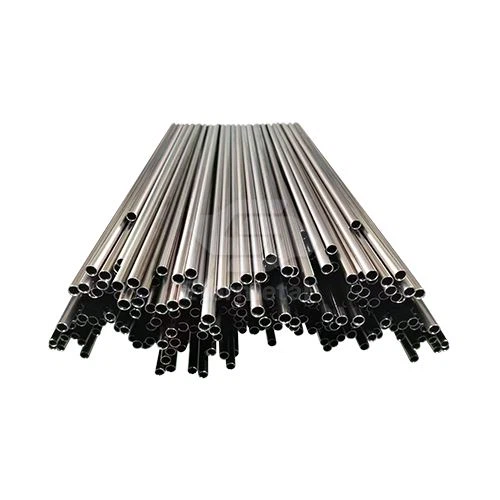
Unlike other metals, titanium incorporates a low weight to high strength ratio. The density of titanium is less than stainless steel, nickel and copper, which makes it easier to work with.
Durability
Our products can be tailored to suit your specific requirements. As a transition metal, titanium is renowned for its high strength.supply the titanium tubes for the motorsport industry where strength, power and performance are of utmost importance.
Corrosion resistance
The titanium tubes are renowned for their ability to resist corrosion and other impacts. Our titanium tubes are manufactured to suit highly corrosive environments, allowing you to maintain a high-quality appearance.
Chemical resistance
Titanium tubes are not only able to resist corrosion; they’re designed to withstand chemical components too. Here at, we supply the titanium tubes in an assortment of grades, ranging from Grade 1 to 12.
Heat transfer
When it comes to thermal conductivity, you cannot go wrong with the titanium tubes that we supply at! Our titanium supplies work well under extreme temperatures and pressures so you needn’t worry about getting the most out of your equipment.
High performance
Regardless of why you need titanium tubes, the team here at can help you to find exactly what you’re looking for. We cut all tubes to length and ensure that they’re tailored to suit your unique needs.
Efficiency
The titanium tubes that we supply incorporate an oxide coating which forms when the metal is exposed to air at elevated temperatures.
Certifications


Our Factory
Stable quality is our soul of business. Etermetal is committed to supply qualified and stable products to clients. Etermetal has a dedicated QC team leading by a 20+ years experienced UT inspectors control products quality from the very beginning to finished products. Produce processes are traceable and recorded. Before shipping, products are all chemical tested, visual inspected, dimensional inspected, physical and , UT inspected. The testing certificate is given to clients before shipping too. BV, SGS third party inspection also available when clients can not come to mill in person.